Choosing the Right Phone Gimbal for Business Needs

application/phone-gimbal, application/phone-gimbal, 
Inquiry
Inquiry

phone gimbal

A phone gimbal  is a  stabilizing device designed to  eliminate shakes and jitters  while filming with a  smartphone,  providing smooth and professional-quality video.  For businesses in sectors like media production,  event  management, or telemedicine,  selecting the right phone gimbal can significantly impact the quality of video content and presentations. Key concerns for B2B buyers  include compatibility  with various  smartphone models,  stabilization technology, build quality, and customization options for specific applications. This  article  will guide you  through important considerations when sourcing  phone gimbals for  your business  needs.

Key Specifications to Evaluate When Sourcing Phone Gimbals

Key Specifications to Evaluate When Sourcing Phone Gimbals

Understanding the crucial specifications of phone gimbals will help you make  an  informed decision. Here are some  key specifications to consider:

Motor Type and Power: Look  for brushless motors, which provide smoother operation and  longer life. The  power of the  motors  affects the gimbal's responsiveness and the weight it can  handle.

Battery Life: The duration of battery life is vital,  especially  for long shoots. Gimbals with extended battery life minimize  the need for frequent recharging, allowing for uninterrupted filming sessions.

Stabilization  Technology: Different gimbals use various stabilization methods. Three-axis  stabilization is standard, providing optimal balance in all directions. Understanding how each technology  works can help you determine which is best suited for your filming environment.

Weight  and Portability: If your team frequently travels or moves between  locations, a lightweight and compact gimbal is  advantageous. Consider foldable  designs that enhance portability.

Customization Options: Depending on your specific needs, you may require gimbals that allow for customization in terms of grip style, mounting options, or control interfaces.

 
A Guide for Distributors

A Guide for Distributors

As a distributor of  phone gimbals,  understanding your target market is essential.  Key factors to consider include:

Market Research: Identify potential customers in industries such as media production, education,  or telemedicine. Tailor your offerings to meet  their specific  needs.

Product Variations: Offer a range  of gimbals  that  cater to different user requirements, from lightweight models for casual users to robust options for  professional  filmmakers.

Pricing Strategy: Competitive  pricing can attract more  buyers.  Consider bulk purchase  discounts  or promotional  offers to entice new customers.

After-Sales Support: Providing excellent customer service and support can enhance  your reputation as a trusted distributor. This includes offering  warranties, repair services,  and user guides.

Understanding the Quality Control in Phone Gimbal Manufacturing

Understanding the Quality Control in Phone Gimbal Manufacturing

Quality control is a critical aspect of phone gimbal manufacturing. Effective  quality  control  processes ensure that  gimbals meet performance standards and customer expectations. Key practices include:

Material  Selection: Using high-quality materials  affects durability and  performance. For instance, carbon fiber components can enhance strength while keeping weight low.

Production Equipment: Advanced machinery and technology  in the manufacturing  process can improve precision in component fabrication, which  is crucial for the performance  of gimbals.

Testing Protocols: Rigorous testing of  gimbals under various conditions  before they reach  the market  helps  identify  defects early. This includes stability tests, battery life assessments, and stress testing for durability.

Certifications: Products that meet  industry standards and certifications (like CE, FCC,  and RoHS) provide assurance regarding safety and environmental compliance. Buyers should  verify these certifications before making a purchase.

Common Problems with Phone Gimbals and Effective Solutions

Phone gimbals, while enhancing  video  quality, can present several challenges. Here are  common issues and their solutions:


Connectivity Issues: Some gimbals may struggle to maintain a stable connection with smartphones, especially with different operating systems. Ensuring compatibility through updated firmware can  mitigate these issues.

Balancing Problems: Improper balancing can lead to erratic movements. Users  should ensure that the phone is securely mounted and balanced according to the  gimbal’s  instructions  to achieve optimal stabilization.

Battery Drain: Gimbals can experience  unexpected battery drain, particularly if  features like AI tracking are continuously used. Educate users on power management strategies, such as turning off unnecessary features when not in use.


Wear and Tear: Frequent use  can lead to wear on  the motors and  joints. Regular maintenance and timely replacement of parts can prolong the lifespan of the gimbal.

By addressing these common issues proactively, businesses can enhance user satisfaction and  operational efficiency.

Selecting the right phone gimbal involves analyzing your specific needs, understanding key  specifications, and maintaining rigorous quality control standards.  By focusing on these  areas, businesses can ensure they choose a reliable product that meets  their operational goals.

How to Choose the Right Phone Gimbal for Your Business Needs

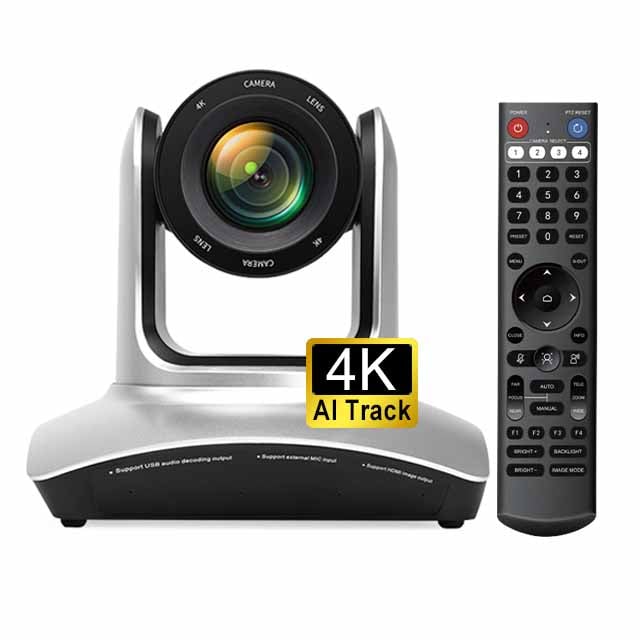
When  selecting a phone gimbal, consider the specific use cases your business requires. Different industries  might prioritize  various features. For instance, a gimbal  suitable for live event broadcasting may need superior stabilization and quick setup, while  one used for  telemedicine applications might focus on portability and ease of use. For example, using a 4K PTZ Camera 60fps AI Auto Tracking Optical Zoom HDMI USB for Conference can enhance the quality in such scenarios.

Compatibility with your existing equipment is crucial.  Ensure the  gimbal can accommodate the smartphone  models  your team uses. Additionally,  evaluate the weight capacity of the gimbal; it should easily support your phone along with any additional accessories like microphones or  lights.

Lastly, assess the level of automation and user-friendliness. Features  like AI auto-tracking, which  Moertek incorporates in its products, can enhance  user experience by allowing  hands-free operation,  making  them  ideal for dynamic environments where operators  may be moving. The 4K AI Voice Tracking PTZ Camera with 12x/20x Zoom, HDMI/USB/IP & PoE is a great example of this technology.

Frequently Asked Questions

What devices are compatible with the phone gimbal?

The gimbal supports most smartphones up to 7 inches and 250g. Adjustable clamp and universal mounting ensure compatibility with iOS and Android devices for stable shooting and conferencing.
Yes. Integrated AI auto-tracking follows subjects smoothly, ideal for presentations, education, and telemedicine when paired with your phone camera.
Typical runtime is up to 10 hours per charge. Recharge via USB-C for fast, convenient charging during sessions or between uses.
Yes. It features mounting points and a stable platform for external microphones, lights, or small accessories to enhance audio and video quality.
Yes. Designed for enterprise, education, and telemedicine, it meets CE/FCC/RoHS requirements and supports OEM/ODM customization for institutional deployments.

Get a Free Quote

Our representative will contact you soon.
0/1000